

World Cup 2026: how to blur faces in your videos and photos (GDPR)
World Cup 2026: how to blur faces in your videos and photos (GDPR)
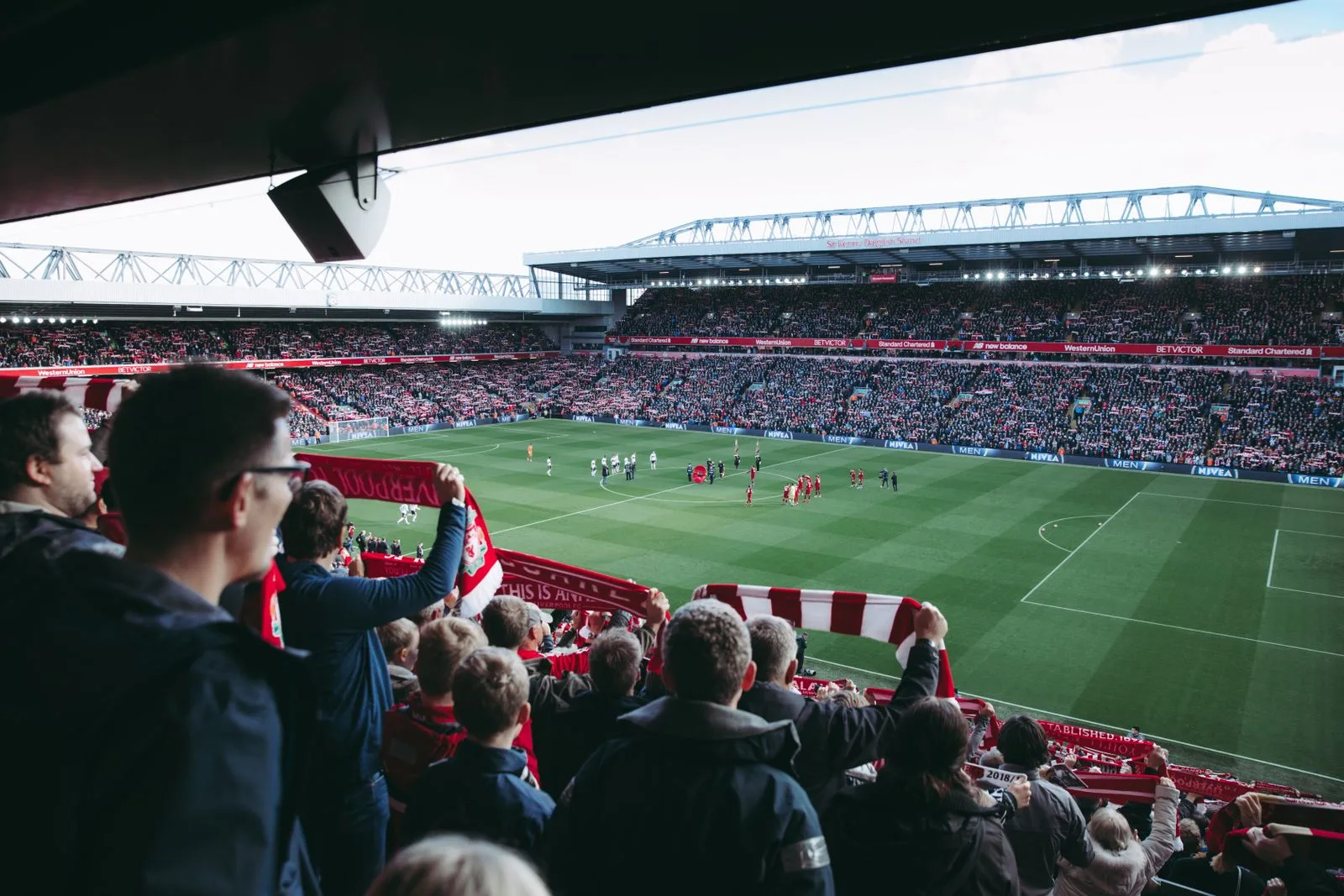
The World Cup 2026 will generate millions of videos and photos: packed stadiums, fan zones, street celebrations, brand content and news reports. The moment you film a crowd, you capture identifiable faces — and therefore personal data under the GDPR. This guide explains when and why to blur faces before publishing, who is concerned (creators, journalists, brands, clubs), and how to anonymize a video of supporters in minutes with YouBlur Studio.
Quick checklist before publishing your World Cup content
- Does a wide shot of a stadium or fan zone contain recognizable faces? Treat it as personal data.
- Are you filming close-ups of supporters, children or spectators who did not consent? Blur before publishing.
- Is the content going to social media, a business website, an ad or the press? The legal basis must be documented.
- Do minors appear? Apply maximum caution: systematic blurring.
- Favour automatic detection + manual review to catch the tricky cases (fast motion, low light, occlusions).
Why the World Cup 2026 changes the game for your footage
A match, a fan zone or a street celebration means tens of thousands of people gathered in a public place. Filming there is generally free, but publishing images where individuals are recognizable falls under a different legal regime. In Europe, the GDPR treats a face as personal data: as soon as a person is identifiable, sharing their image requires a legal basis (consent, legitimate interest, journalistic purpose…).
Volume and virality make the risk worse. A clip shot in the stands can rack up millions of views within hours, be re-uploaded, indexed and become impossible to remove. A spectator who recognizes themselves — or their child — can exercise a right to object or invoke their right to their own image. For a brand or a newsroom, this is a concrete reputational and legal risk, not a theoretical one.
Who should blur faces during the World Cup 2026?
Content creators and community managers
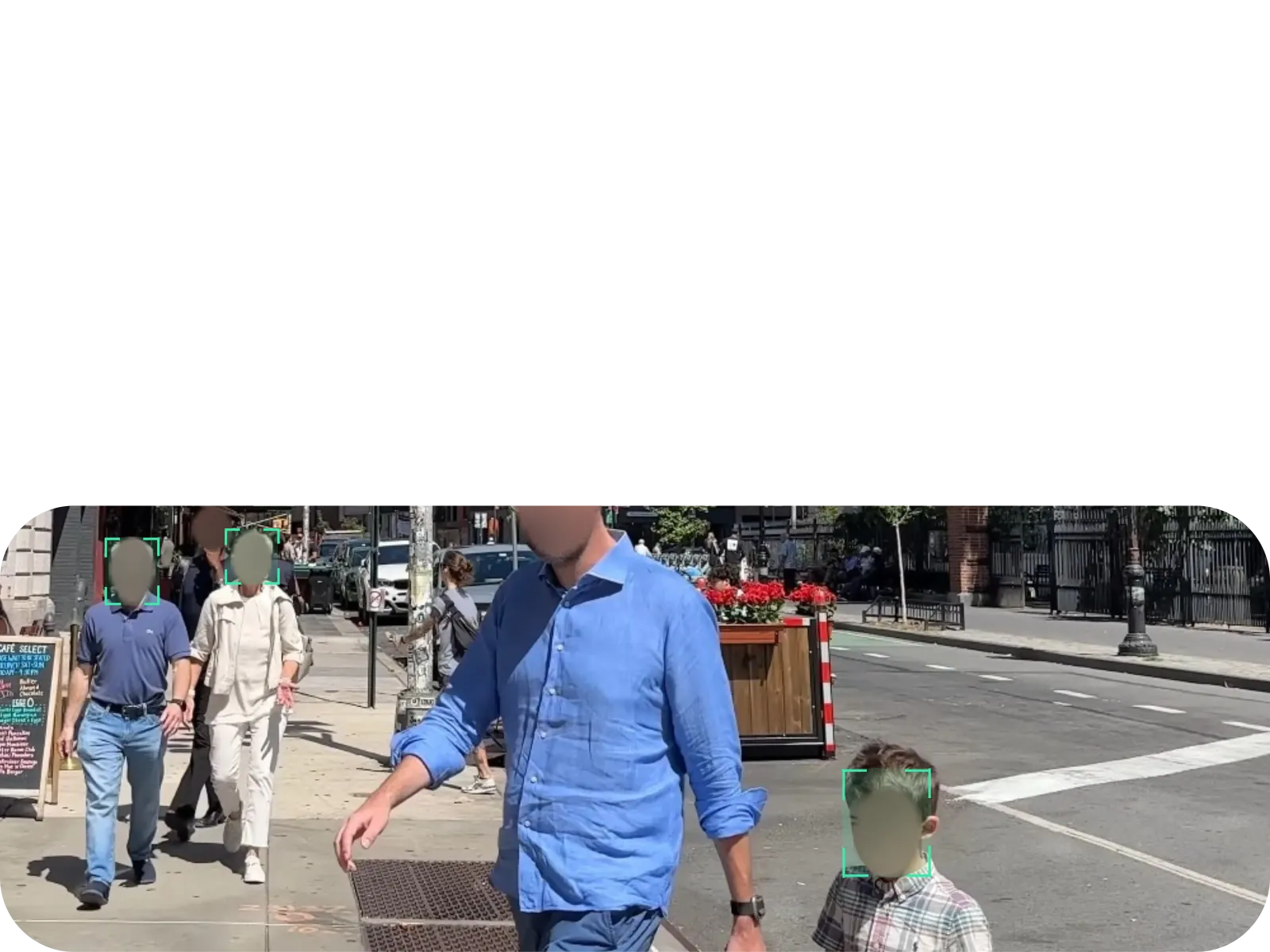
Match vlogs, stadium-atmosphere edits, fan-zone TikToks: these formats constantly capture non-consenting third parties. Blurring secondary faces protects you while keeping the energy of the scene.
Journalists and media
Journalism benefits from exemptions, but they don't cover everything: close-ups of people not involved in the event, and above all minors, often need to be anonymized. Fast anonymization is also handy when deadlines are tight.
Brands, sponsors and fan zones
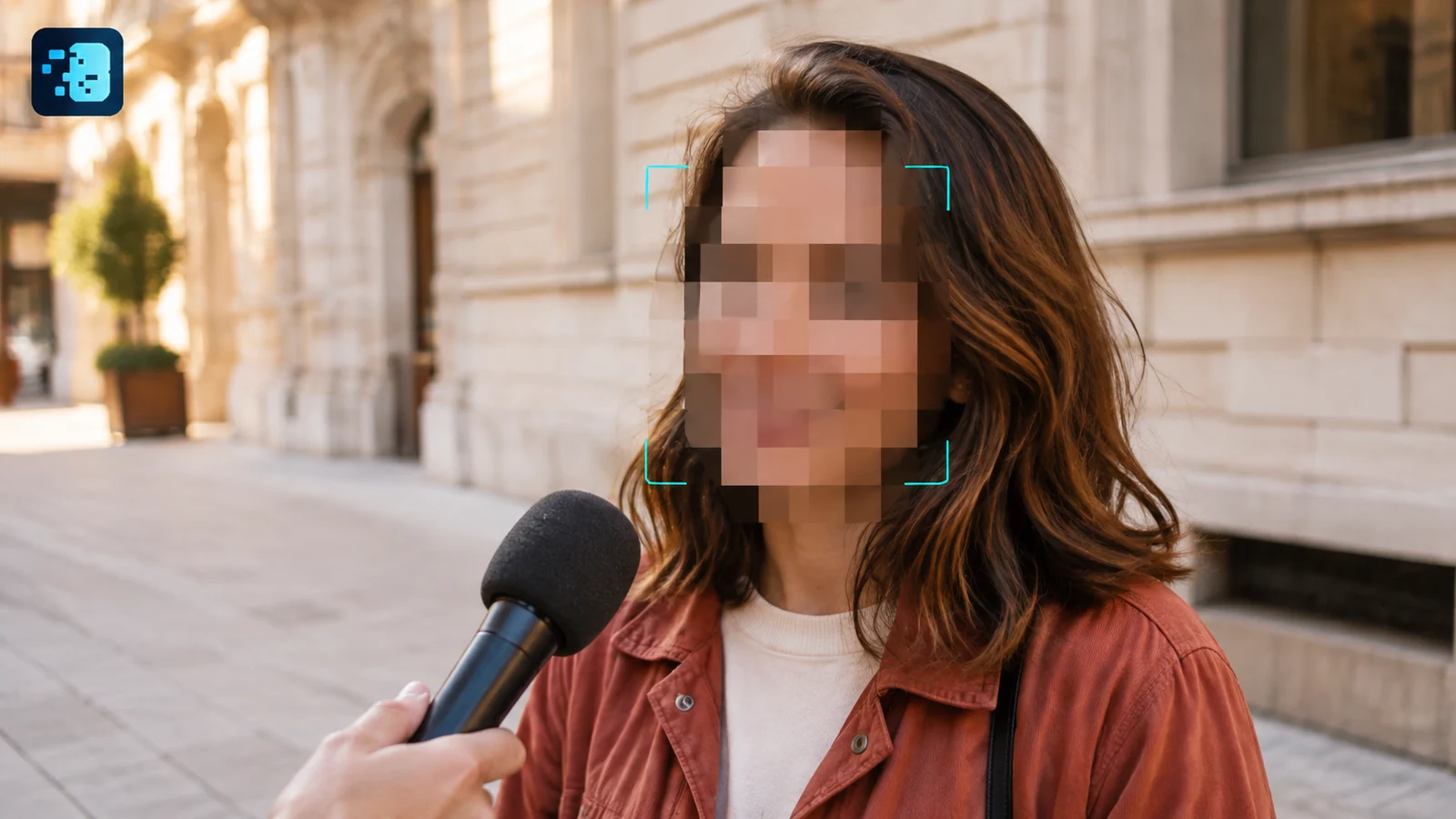
A brand-activation shoot distributed as advertising is a commercial use: here, consent from people filmed in close-up is the rule, and blurring is the default solution for every face not covered by a release.
Amateur clubs, schools and local authorities
Neighbourhood tournaments, big-screen viewings, school celebrations: as soon as children are present, blurring faces is the reflex expected by parents and data-protection authorities alike.
| Profile | Main risk | Recommended reflex |
|---|---|---|
| Creator / CM | Viral spread of non-consenting faces | Blur secondary faces before publishing |
| Journalist | Close-ups of third parties and minors | Anonymize people not involved |
| Brand / sponsor | Commercial use without a release | Consent or systematic blurring |
| Club / school | Presence of minors | Systematic blurring of children |
What the GDPR says about faces filmed in public
The right to your image doesn't vanish in a crowd
Filming a crowd to convey the general atmosphere of an event is usually tolerated: nobody is isolated, nobody is the « subject » of the image. The problem appears when a person becomes identifiable and singled out — a close-up, a supporter in the foreground, a sharp face filling the frame. There, publishing requires a clear legal basis, and blurring is the simplest way to neutralize it.
The special case of minors
Children enjoy reinforced protection. If there is any doubt about age or parental consent, the only prudent stance is to systematically blur minors' faces, even in atmosphere shots.
Rule of thumb: if a person is recognizable and is not the willing subject of the scene, assume you should blur them — then remove the blur only where you have consent or a legal basis.
When to blur (and when it isn't required)
- To blur: close-ups of spectators, children, recognizable people in the foreground, vehicle license plates, badges, screens showing personal data.
- Generally acceptable without blur: very wide shots where individuals blend into the mass, players on the pitch within the public event, people who explicitly consented to being filmed (interviews).
- Grey area: supporters filmed from behind but still recognizable (tattoos, custom jerseys), or shots where a person becomes identifiable after zooming. When in doubt, blur.
How to blur faces in a supporters' video in 3 steps
No heavy editing software required: everything happens in the browser with YouBlur.com. Watch the demo:
- 1. Import your clip or photo into the video blurring tool. AI face detection automatically spots everyone present.
- 2. Review the detections frame by frame on the canvas. Add any missed faces by hand (dense crowd, low light), fine-tune tracking, and choose between blur and pixelation.
- 3. Export a privacy-compliant video or image, watermark-free, ready to publish. Keep the source file as a record in case of a GDPR request.
For high volumes (multi-day coverage, editorial teams), see the plans & pricing or the enterprise offers.
Blur, pixelation or full masking: which to choose?
| Method | Best for | Good to know |
|---|---|---|
| Gaussian blur | A discreet, clean look on social media | A blur that is too light can remain reversible: push the intensity on sensitive footage |
| Pixelation | A clear visual signal of anonymization (press, institutional) | Pick a block size large enough to prevent any recognition |
| Full masking (blackout) | Maximum anonymization, evidence, legal contexts | Removes all information: the safest option when no doubt is allowed |
To go further on choosing a method, read our guide on blurring faces in a video with AI and the comparison blackout, blur or pixelation.
Common mistakes to avoid
- Blurring only the « main » face and forgetting the recognizable people in the background.
- Relying on a blur that is too light: on a sharp, high-resolution image, a weak blur can be partially reversed.
- Ignoring plates and screens: a license plate or a ticket showing a name are also personal data.
- Publishing first, fixing later: once online and re-shared, a video is almost impossible to take down. Anonymize before going live.
FAQ — Blurring faces at the World Cup 2026
Am I allowed to film in a stadium during the World Cup 2026?
Filming for personal use is generally tolerated, subject to the venue's rules. It is the public distribution of images where people are identifiable that is governed by the GDPR and the right to image.
Do I have to blur every face in a crowd video?
Not necessarily in very wide shots where nobody is singled out. However, close-ups, recognizable people in the foreground and minors must be blurred if you don't have consent.
Is blurring mandatory for commercial or advertising use?
For commercial use, consent from people filmed in close-up is the rule. Blurring is the default solution for every face not covered by a written release.
How long does it take to anonymize a video?
With YouBlur's automatic detection, a short clip is blurred in minutes, review included. Everything happens in the browser, with no installation.
Can the blur be removed by someone else?
A properly applied, strong-enough blur is not reversible. For the most sensitive cases, prefer heavy pixelation or full masking.
In short
The World Cup 2026 is an exceptional content opportunity — as long as you respect the privacy of the people you film. The reflex is simple: anonymize before you publish. Import your clips into YouBlur Studio, let the AI detect the faces, review, export. You keep all the power of your footage, without the legal risk. Also read why you should anonymize your footage before publishing.